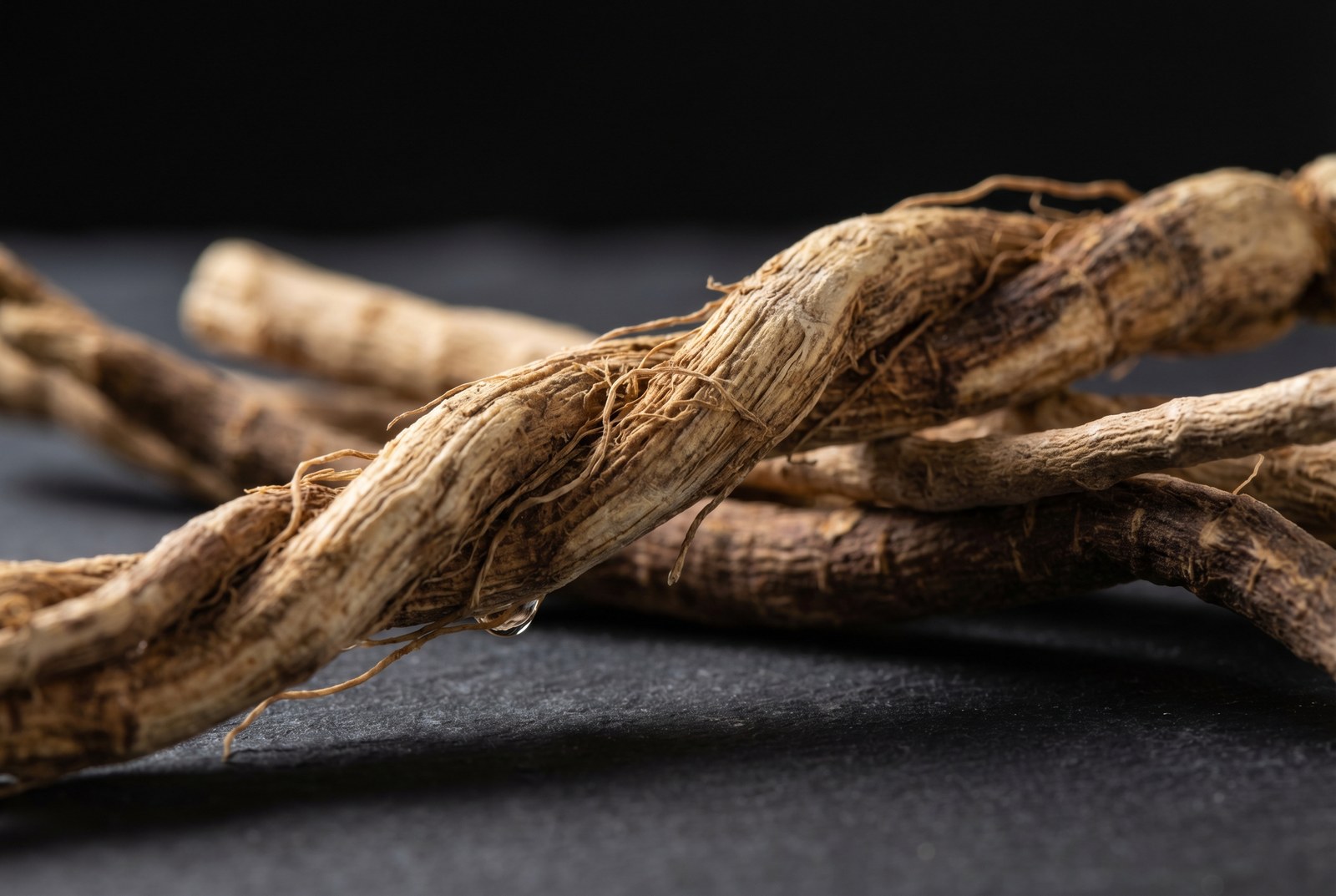
You bought ashwagandha before. Maybe from Daraz, maybe from a pharmacy. LKR 1,200, maybe less. You took it for two weeks, maybe three. Nothing happened. So you stopped and concluded it doesn't work.
You were probably right that what you took didn't work. You were probably wrong that ashwagandha doesn't work. The difference matters, and it comes down to one thing: the active compound, and whether you were actually getting enough of it.
What the active compound actually is
Ashwagandha root contains a group of compounds called withanolides. These are the compounds responsible for the adaptogenic effects — the cortisol regulation, the sleep improvement, the stress response modulation. The rest of the root is plant matter. It's not harmful, but it's not what produces the effect.
Clinical trials that show measurable results use standardized ashwagandha extract. Standardized means the withanolide content has been measured and guaranteed at a specific percentage. The most commonly used standardization in major trials is a standardised withanolide level. That's the level needed to produce a reliable, consistent effect at the 300mg to 600mg dose range.
What raw powder actually contains
Most cheap ashwagandha on the market is raw root powder. It contains withanolides, yes — but in amounts that vary unpredictably from 0.5% to 3% depending on the plant origin, harvest timing, soil conditions, and processing method.
The practical consequence of this is significant.
If a capsule of raw powder contains 500mg and the withanolide content is 0.5%, you're getting 2.5mg of active compound. If the standardization is 5%, you're getting 25mg. That's a 10x difference in effective dose — from the same label claim of "500mg ashwagandha."
The clinical trials that show 27% cortisol reduction used extract with guaranteed a standardised withanolide level. If you were taking raw powder with 0.a standardised withanolide level, you were taking one-tenth the effective dose. Of course nothing happened.
- Withanolide content unknown
- Varies batch to batch
- No third-party verification
- Dose unpredictable
- Clinical results unreplicable
- Withanolide content guaranteed
- Consistent batch to batch
- Quality certifications required
- Dose predictable
- Clinical results replicable
The other reason it didn't work: timing
The second most common reason for early non-response is stopping before the compound has had time to work. Ashwagandha does not produce an acute effect. There's no "first dose" experience. The mechanism is accumulative — the cortisol regulation effect builds over weeks as the withanolides reach therapeutic levels in the system.
Clinical studies measure primary outcomes at 8 weeks. Most people notice the first changes around week 3. Two weeks is not enough. Three weeks may not be enough. If you stopped before week 6 to 8, you may have stopped right before the effect became measurable.
The two conditions for ashwagandha to work: First, you need a standardized extract with guaranteed withanolide content — 5% is the clinical benchmark. Second, you need to give it the full 8 weeks before drawing any conclusions. Most people who say it doesn't work failed one or both of these conditions. Often both.
How to check what you're buying
Look at the supplement label. Specifically, look for these words: "standardized to X% withanolides." If the label does not state a withanolide percentage, you are buying raw powder. The label might say "ashwagandha root extract" — but without the withanolide percentage, extract is a loose term. It could mean anything.
Check whether the product is backed by quality certifications. GMP, ISO 22000, and HACCP certification require documented manufacturing controls that verify what's in the capsule. Without these standards, standardization claims are unverified.
Price is a rough signal. Standardized extract costs significantly more to produce than raw powder. If the price is very low, you're almost certainly getting raw powder regardless of what the label says.
If you've verified the extract and still felt nothing
A small percentage of people — statistically uncommon but real — don't respond to ashwagandha at the standard dose. If you've used a verified 5% standardized extract at 500mg per day for 8 full weeks and experienced no change, you're likely in this category.
This is not a failure. Not every compound works for every person. The clinical data shows effects in the majority of participants, not all. Knowing this before you start is useful — it means you can make an informed decision about whether to continue past week 8 rather than continuing indefinitely hoping something will eventually change.
This article is for informational purposes only. Comparisons between product types are based on general published research on ashwagandha extract standardization. They do not constitute claims about any specific competitor product. Consult your doctor before starting any supplement.