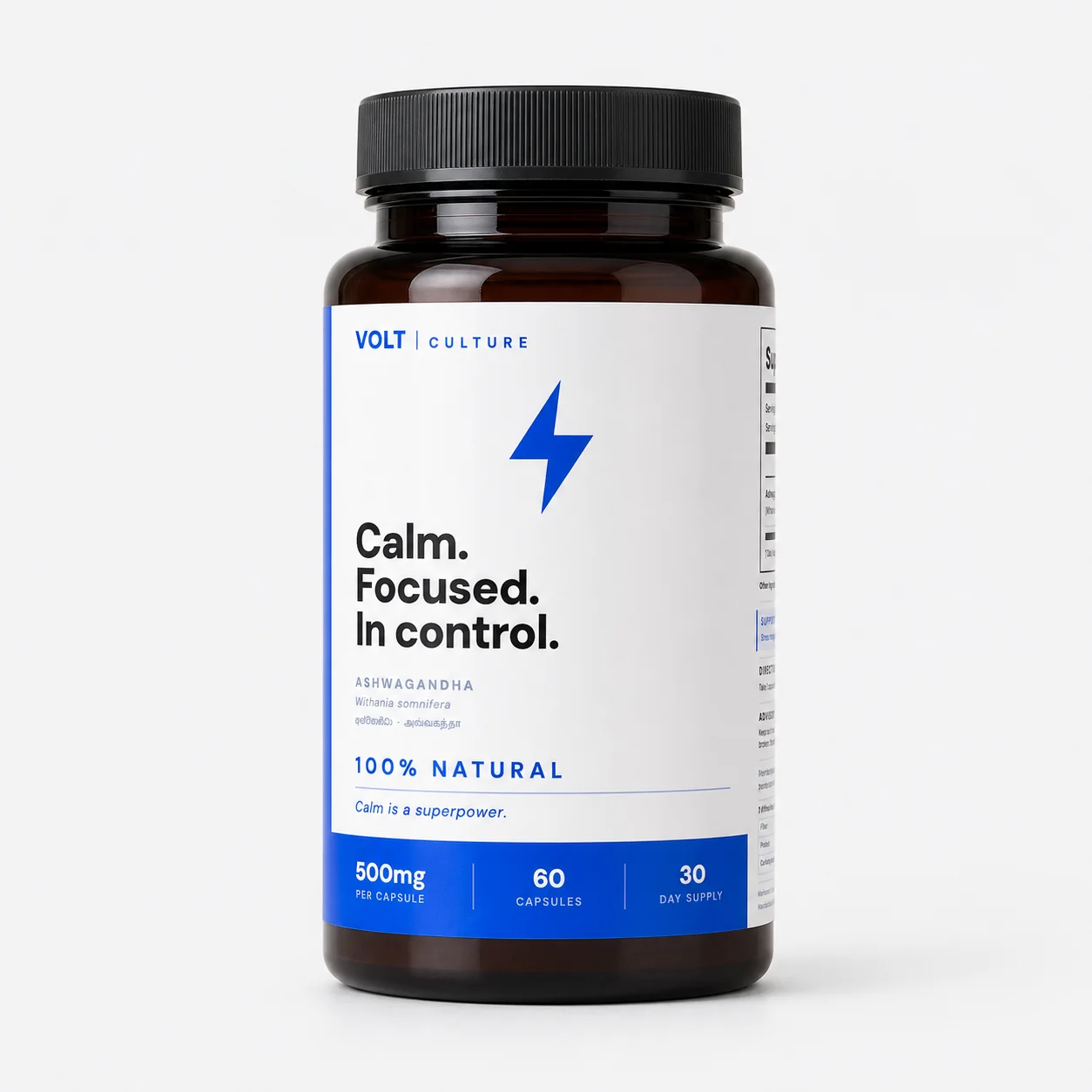
If you tried ashwagandha and felt nothing, this is the most likely reason. The difference between raw root powder and a standardized extract is not a minor quality distinction. It determines whether you get a measurable amount of the active compound at all.
What the active compound actually is
The beneficial effects of ashwagandha come primarily from a group of compounds called withanolides. These are naturally occurring steroidal lactones found in the root. The clinical studies that show 27% lower stress hormone and improved sleep quality all use preparations with defined withanolide concentrations.
The key phrase is "defined concentration." That means someone tested the product to confirm how much withanolide is actually present. Raw powder has no such guarantee.
What raw powder actually contains
Raw ashwagandha root powder is exactly what it sounds like: dried root, ground into powder, put into a capsule. No processing to concentrate the active compounds. No testing to confirm potency. The withanolide content of raw root varies significantly based on:
- Soil quality where the plant was grown
- Climate and rainfall during the growing season
- Age of the plant at harvest
- Storage conditions after harvest
- Processing methods before encapsulation
The natural withanolide content in raw ashwagandha root typically ranges from 0.5% to 3%. That is a 6x range. You have no idea where on that range your specific batch lands.
The practical problem: If you take 500mg of raw powder at 0.a standardised withanolide level, you are getting 2.5mg of the active compound. At 3%, that same 500mg capsule contains 15mg. The difference between taking 2.5mg and 15mg is not subtle — it is the difference between a therapeutic dose and an ineffective one.
What standardized extract means
A standardized extract goes through a process that concentrates the withanolides to a specified percentage. Then it is tested to confirm that percentage before the batch is released. "Standardised extract" means:
Every 500mg capsule contains exactly 25mg of withanolides. Not approximately. Not "naturally occurring amounts." Exactly 25mg. That consistency is what 'standardised extract' means. It is a specification, not an estimate.
This is why clinical studies use standardized extracts. You cannot run a study on a variable. You need to know the dose.
Why cheap brands use raw powder
Standardization costs money. You need to extract and concentrate the active compounds. You need laboratory testing. You need documentation. You need quality controls that add to the cost of production.
Raw powder is cheap to produce. You grind the root. You fill the capsule. You put a label on it. There is no testing cost because there is nothing to test. The brand does not know the withanolide content of its product — and it does not need to, because it never claims a specific amount on the label.
This is why most ashwagandha products list "500mg ashwagandha root powder" on the label without any withanolide percentage. They cannot make that claim because they have not measured it.
What this means for your experience
If you tried ashwagandha from a generic brand — from a pharmacy, Daraz, a health food shop — you almost certainly took raw powder. If you felt nothing, the most likely explanation is not that ashwagandha does not work for you. It is that you did not take a sufficient dose of the active compound to produce a measurable effect.
The people who report that "ashwagandha did nothing" are overwhelmingly taking raw powder. The people who report clear effects are taking standardized extracts, usually at 300mg to 600mg of the extract per day with a defined withanolide percentage.
This is not anecdote. It is the same reason clinical trials do not use raw powder: if you want to study the effect of a compound, you need to control how much of that compound you are administering.
This article is for informational purposes only. References to clinical research are about published studies on standardized ashwagandha extracts, not claims about any specific product. Consult your doctor before starting any supplement if you have a medical condition or take prescription medication.